I find sharing work I’m doing to be very anxiety inducing. It’s not so much that I loathe criticism, I actually quite enjoy hearing how things I’m doing can be improved, it’s more so the fear of wasting time. When you first brainstorm something that in your head works and produce the components of it without issue the last thing you want to see is the culmination of the project slump over and just be rather uninteresting. This is a story of just that, and how to work through it.
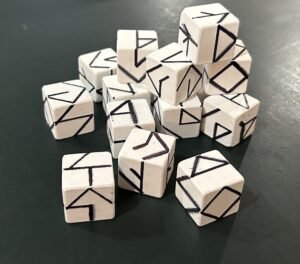
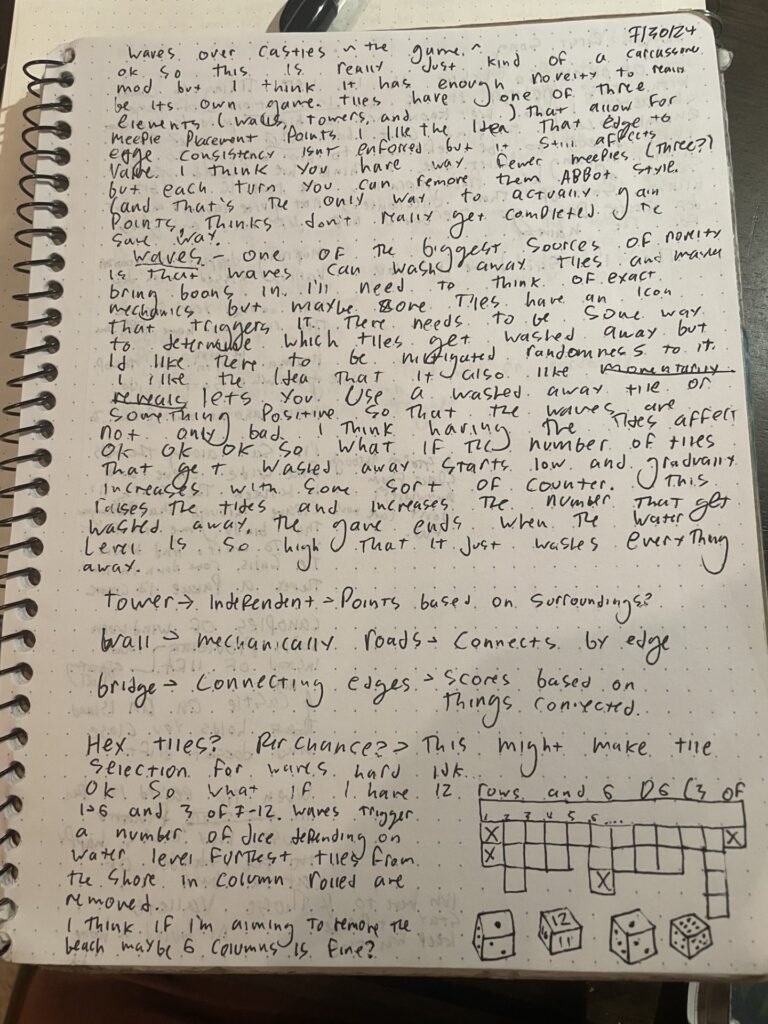
The project we call Sand castles started as an expansion to one of my and Eli’s favorite games, Carcassonne. It was originally Eli’s brain child, he nicknamed Carcassand, where the main concept was an incoming tide that would make certain pieces of the board unusable. This would impact scoring as your paths or castles might become covered preventing you from getting the maximum amount of points. That was about where it got to, a concept that lacked a functioning mechanism, and it sat like that for nearly a year. That was until roughly 2 months ago when Eli and I were discussing some old concepts of games and Carcasand was brought up again. I think my exact words were, “Give me a day, and I’ll get back to you.” That night I laid awake on my phone’s notes app jotting down ideas until at least 2 in the morning, much to the chagrin of my girlfriend and future me.
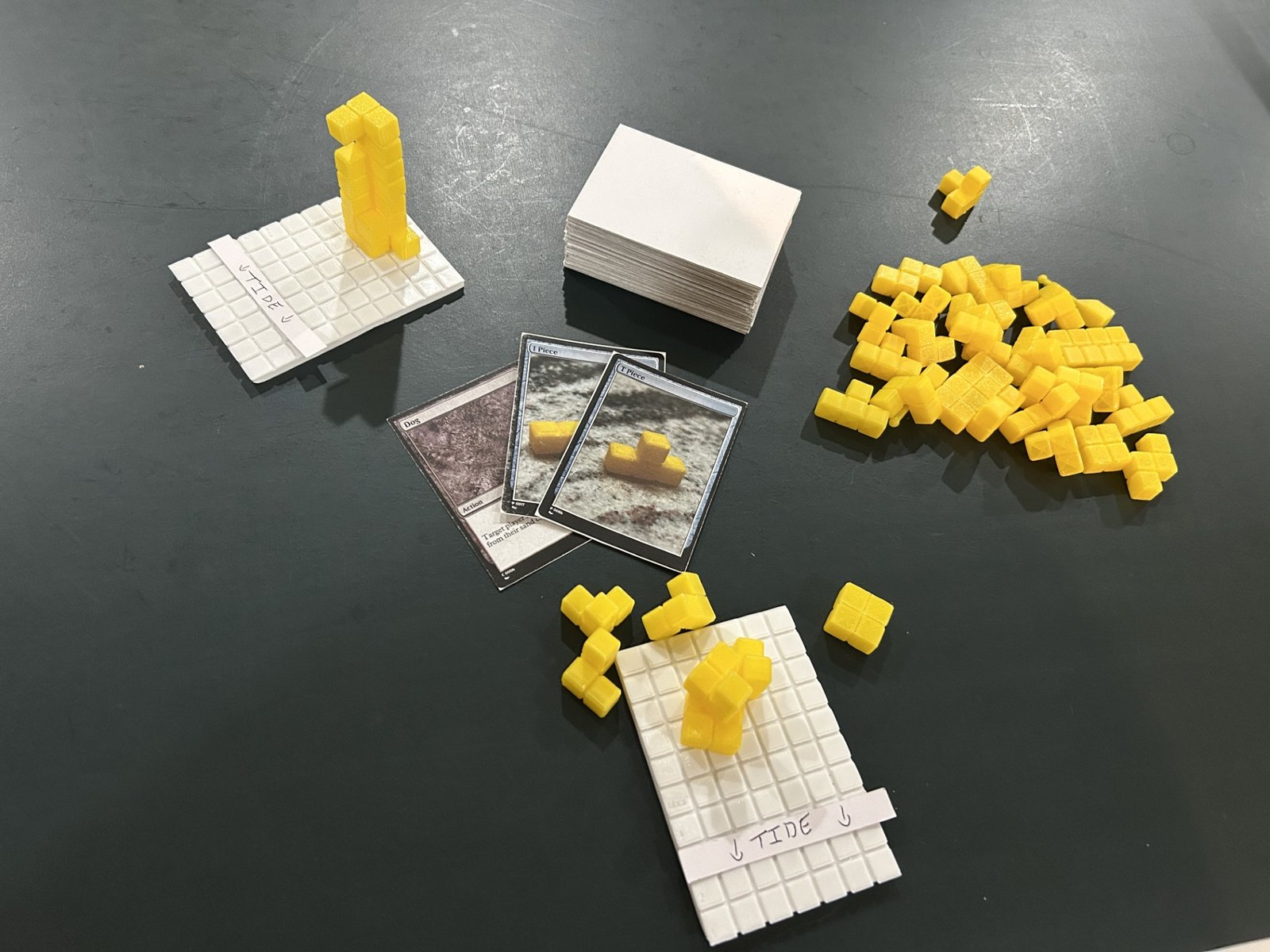
That next morning I started working on this game. One rule I set for myself was no complex games as I had been designing a very complicated game with many pieces, and wanted a smaller project to work on. Having abandoned the Carcassonne tether I decided to focus on the building against nature aspect and arrived at a simple game where you try to build a tower using random blocks you’re given from building cards. As the game continues the tide rises and slowly your tower begins to get washed away, leading you to have to build more around the base just to protect what you already built. I went and printed the needed cards, and using my new 3D printer I even made little blocks to build with. Everything was going fantastically.
A couple of days after I finished making all the parts we decided to play. My girlfriend’s family had some friends over who were really into board games. What’s better is they didn’t know me, meaning if I had them playtest their feedback would be far more honest and way more helpful! So that night I asked if they wanted to test a game I made, and it didn’t go horribly… It didn’t go well either though. The friends found the game to lack a lot of strategic depth. Sure there was a lot of freedom in how you could place your blocks, but the correct action was pretty obvious, meaning the available places to put blocks was actually quite limited. The mechanics worked fine, but it wasn’t in a very fun state.
Now instead of being disappointed and shelving the idea for a while, which is what I usually would do when something didn’t work great. I really worked to brainstorm some solutions to these big issues. I solved the issue of strategic depth with 2 changes:
- Hand of Cards: Now you would draw a small hand and choose 2 to play, rather than just grabbing whatever was on the top of the deck. This gave more choice in organizing your structure and even creating voids you could fill later when you draw the right card.
- Action Cards: These can also be drawn from the deck and can be either helpful to you or harmful to opponents, giving you more agency in stopping your opponents or increasing your likelihood to draw what you need. Additionally, these came with a cost as playing one meant you only could play 1 building card that round, decreasing how many blocks you could play.
After these small tweaks we played again (it was another day, I’m not that efficient at making cards). The issues were dramatically improved, not perfected, but the game was more of a game now. There were a lot of opportunities to make fun moves. My girlfriend’s father decided to use all of his harmful cards only against me, not because I was winning but because I’m the boyfriend. We ended up playing 3 or 4 games that night and I got even more insight for the next version. Overall it was a super positive experience.
This is a great example of the iterative process of making a game. It is very annoying when the hard work you put into something doesn’t pan out, but I learned to not view it as a waste of time. Instead, think of it as another step, just like designing a mechanism or making the pieces is a step. Focusing on what you can gain from the failure rather than the actual failure helps a lot here. Treat your playtesters with some respect and use their feedback to improve your game rather than shelve it and end up wasting everyone’s time in the end.